.png)
.png)

Can You Heat Press on Polyester? A Complete Commercial Guide for Apparel Manufacturers
February 25, 2026
Yes, you can heat press on polyester. However, polyester requires stricter temperature control, material compatibility testing, and stable pressure systems compared to cotton or blended fabrics. Because polyester is heat-sensitive and prone to dye migration, successful commercial application depends on selecting the correct transfer materials and using precision-controlled equipment. For manufacturers producing sportswear, uniforms, promotional garments, and performance textiles, mastering polyester heat transfer is essential to minimizing defects and maximizing production efficiency.
Polyester dominates modern textile manufacturing due to its strength, moisture resistance, color vibrancy, and durability. According to the American Chemistry Council, polyester is a thermoplastic polymer, meaning it softens when exposed to high heat. This property makes it highly versatile but also vulnerable to overheating during heat transfer processes. Understanding this material behavior is the foundation of reliable production.
Why Polyester Reacts Differently Under Heat
Unlike cotton, polyester does not tolerate excessive temperatures. While cotton can withstand over 200°C, polyester typically begins to soften between 150°C and 160°C. Exceeding this range may result in visible shine marks, fabric distortion, or permanent scorching.
Another major concern is dye migration. Many polyester fabrics are dyed using disperse dyes. When reheated during transfer application, these dyes can reactivate and bleed into transfer films, especially white or light-colored graphics. This is particularly common in athletic jerseys and sublimated garments.
For commercial decorators, these risks translate into potential rework, wasted materials, and production delays. The solution lies in calibrated heat settings, low-bleed transfer materials, and equipment capable of maintaining uniform platen temperature.
Recommended Heat Settings for Polyester Applications
To answer can you heat press on polyester in a production context, decision-makers must rely on controlled parameter ranges. Below is a general guideline used in commercial environments:
| Transfer Type | Temperature | Time | Pressure | Risk Level |
|---|---|---|---|---|
| Low-Temp HTV | 120–150°C | 10–15 sec | Medium | Low |
| DTF Transfer | 130–160°C | 10–20 sec | Medium | Low-Medium |
| Plastisol Transfer | 160–175°C | 10–15 sec | Medium-High | Medium |
| Sublimation | 180–200°C | 30–45 sec | Medium | Higher |
Table 1: Typical commercial heat press parameters for polyester fabrics
Testing is always recommended before full-scale production runs, especially for dark garments where dye migration risk increases.
Equipment Requirements for Stable Polyester Production
In industrial settings, machine consistency directly impacts defect rates. Temperature fluctuations of even a few degrees can cause uneven adhesion or fabric damage. A professional-grade heat press machine is designed with digital PID temperature control, even heat distribution across the platen, adjustable pressure systems, and stable timer accuracy.
These features ensure repeatability across high-volume production cycles. For contract decorators and garment factories operating multi-shift schedules, thermal stability over long operational hours is critical.
Automation for High-Output Manufacturing
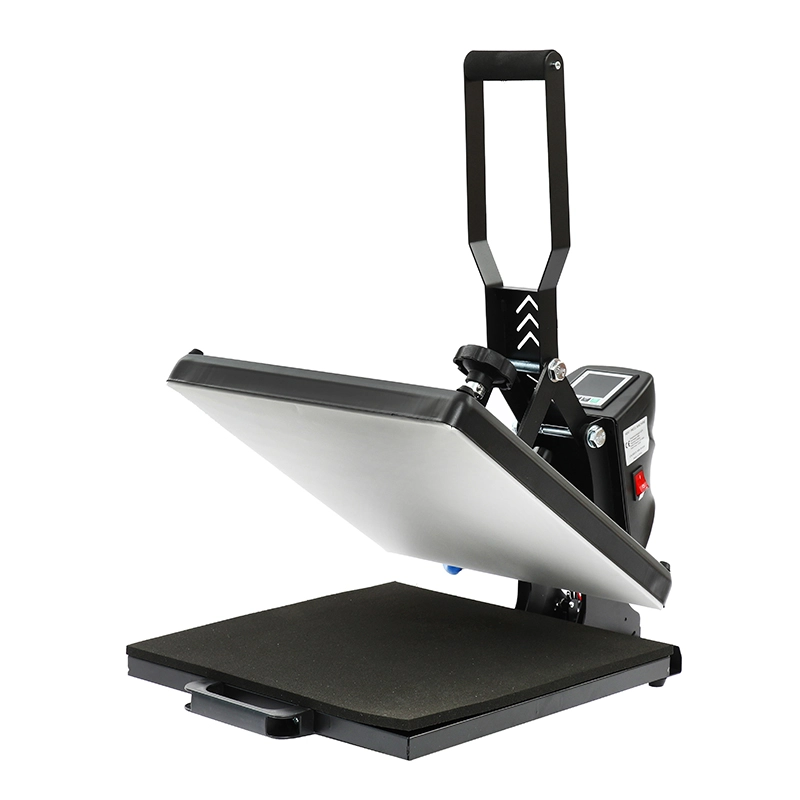
As order volumes grow, automation becomes necessary to maintain both speed and quality. An Automatic Heat Press enables dual-station or shuttle-based workflows, allowing operators to prepare one garment while another is being pressed. This significantly improves throughput without compromising temperature precision.
Automation also reduces operator fatigue and improves consistency, especially in facilities processing thousands of units daily.
Preventing Dye Migration in Performance Apparel
Sportswear and performance textiles present higher risk due to saturated dyes. Managing dye migration requires a combination of process control and material selection.
First, use low-bleed or polyester-specific heat transfer vinyl. These products incorporate blocker layers that reduce dye interaction.
Second, lower temperature whenever possible while maintaining proper adhesion. Many modern transfer films are engineered for reduced heat application.
Third, conduct a brief pre-press to remove moisture and stabilize fibers before applying the transfer.
Fourth, allow garments to cool fully before peeling. Premature peeling can increase ghosting or distortion.
Implementing documented process standards reduces production variability and protects profit margins.
Beyond Apparel: Polyester-Coated Product Applications
Polyester heat transfer is not limited to garments. Many promotional and industrial products feature polyester coatings designed for customization.
Drinkware personalization, for example, requires controlled cylindrical heat application. A specialized Tumbler Press ensures uniform pressure across curved polyester-coated surfaces, preventing uneven adhesion and image distortion.
For suppliers expanding into promotional merchandise or corporate gifting markets, dedicated equipment improves product consistency and expands revenue streams.
If you are evaluating equipment upgrades or planning polyester-based production expansion, contact our technical team for tailored equipment recommendations.
Quality Control Protocols for Commercial Operations
Professional manufacturers should establish standardized operating procedures when heat pressing polyester.
Temperature Calibration
Monthly calibration of sensors ensures digital accuracy and prevents drift.
Pressure Standardization
Documented pressure settings maintain consistent adhesion across batches.
Environmental Monitoring
Humidity and ambient temperature can influence transfer performance. Controlled environments reduce variability.
Sample Archiving
Retaining approved test samples provides reference standards for repeat orders.
These measures improve repeatability and reduce costly returns or warranty claims.
Frequently Asked Questions
Can you heat press on polyester without scorching it?
Yes, provided temperatures are kept within safe ranges and low-temperature transfer materials are used.
What is the safest temperature for polyester?
Typically between 120°C and 150°C for most HTV applications, depending on material specifications.
Why does polyester turn shiny after pressing?
Shine marks occur when excessive heat alters the fiber surface. Lower temperature and shorter press time can prevent this.
Is polyester suitable for large-scale commercial printing?
Yes. Polyester is highly durable and widely used in uniforms, sportswear, and promotional garments when processed correctly.
Can sublimation be used on polyester fabrics?
Yes. Sublimation bonds effectively with high-polyester-content materials but requires higher temperatures and precise control.
Conclusion
So, can you heat press on polyester? Absolutely. The key is precision. Polyester demands accurate temperature management, appropriate transfer materials, and industrial-grade equipment capable of delivering consistent performance. For commercial manufacturers, the difference between success and waste often comes down to machine reliability and process discipline.
About Taile
Taile is a professional heat press machine supplier dedicated to delivering reliable, efficient, and scalable thermal transfer solutions for global manufacturers and decorators. Our product portfolio includes manual systems, automated production presses, and specialized equipment engineered for stable temperature distribution and long-term industrial durability. By combining technical expertise with customer-focused engineering support, Taile helps decision-makers optimize production workflows and achieve consistent, high-quality transfer results.
Reference
Polyester – https://en.wikipedia.org/wiki/Polyester
Textile Heat Setting and Synthetic Fibers – Textile Institute
https://www.textileinstitute.org